Exploring Bike History Through the Rise of Electric Bikes
July 28, 2025
eBikes might seem like a modern convenience, but they’re rooted in over 100 years of bike history. Patents for battery-powered bicycles appeared in the 1890s long before lithium batteries or bike lanes were part of our everyday lives. Back then, eBikes were ambitious experiments, limited by the technology of their time.
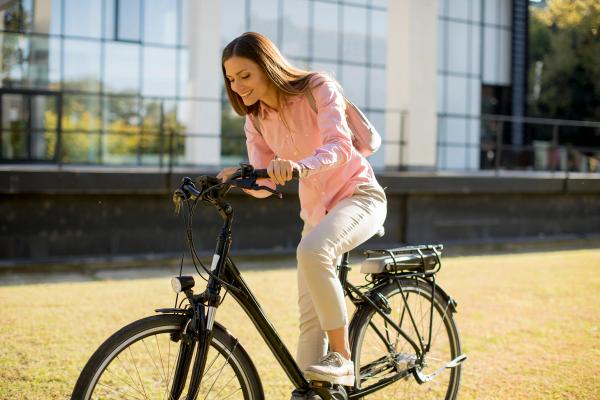
Fast forward to today, and things have changed. eBikes are now intelligent machines designed to fit seamlessly into city life. It’s become common to see someone glide past traffic with pedal assist, coasting into the office without breaking a sweat.
What began as a novelty decades ago has become a trusted way to get around. However, that transformation didn’t happen overnight. It’s the result of years of innovation, investment, and shifting ideas about how—and why—we travel. In this post, we’ll explore that journey and what it might tell us about the future of mobility systems.
There's lots to cover, so let's dive in.
Electric bike history at a glance
Before we dig into the details, here’s a quick timeline of electric bike history. It’s a helpful snapshot of how far the tech has come and how fast it’s moving now:
- 1895: The first US patent for an electric bike was filed by Ogden Bolton Jr.
- 1897: Hosea W. Libbey introduces the idea of a mid-drive motor.
- 1950s–1970s: A few experimental eBikes appear as fuel-saving alternatives.
- 1990s: Postal services in Europe and Asia began using eBikes.
- Early 2000s: Lithium batteries make eBikes lighter and more practical.
- 2010s: Pedal-assist systems go mainstream.
- 2020s: Smart, connected eBikes offer new ways to get around.
The 19th-century vision that sparked today's eBike
As we just mentioned, the idea of an electrically assisted bicycle goes back further than most people realize. In 1895, Ogden Bolton Jr. filed a US patent for a battery-powered bike with a hub motor built into the rear wheel. A couple of years later, Hosea W. Libbey took a different approach, positioning a motor near the crank—an idea that still powers many modern eBikes today.
These breakthroughs are a fascinating part of bike history, even if they didn’t take off right away. Lead-acid batteries added nearly as much weight as the bike itself, and motors delivered a fraction of the power modern systems offer. On top of that, charging options didn’t exist.
Still, those first sketches planted a seed. Even in the 19th century, engineers and cyclists were imagining a future where electric support could make cycling easier.
For decades, progress was slow but steady
After those early patents, electric bike development stayed largely under the radar. A few prototypes appeared (especially during the fuel-conscious decades of the 1950s and 1970s), but most weren’t suited to everyday use.
That said, the idea never entirely disappeared. In many Western countries, eBikes remained a fringe concept. But utility bikes quietly gained traction in parts of Asia—where urban commutes were shorter and fuel costs loomed larger.
Early models in China and Japan used sealed lead-acid batteries paired with simple hub motors. They were affordable and functional but far from refined. For instance, the batteries were heavy, needed regular replacement, and offered limited range, especially in colder climates.
Momentum returned in the 1990s as growing traffic and environmental concerns pushed manufacturers to think differently about mobility systems. In Europe and Asia, companies started designing eBikes specifically for delivery fleets and postal services. These models offered a cleaner, quieter alternative to petrol-powered scooters. But for the everyday rider, they still fell short. Bulky frames and slow charging times meant most people didn’t see them as a serious replacement for a bicycle or moped.
The missing piece? Better battery technology.
The 2000s changed everything for eBikes
The early 2000s ushered in the era of lithium batteries, replacing the bulkier lead-acid versions that had held eBikes back. Lighter, faster to charge, and able to store more energy, these new batteries made longer rides genuinely appealing.
Europe led the way, particularly the Netherlands. Instead of bolting motors onto traditional bikes, manufacturers began designing around the electric system itself. For example, motors moved closer to the crank for better balance. Torque sensors also got smarter, and drivetrains were tweaked for range and reliability, not just speed. This resulted in a smoother, more natural ride that felt much closer to cycling than scootering.
It helped that European cities were already set up for bikes. Excellent infrastructure and a strong cycling culture meant people were quick to notice the benefits:
- Skipping traffic
- Avoiding sweat
- A low-impact way to stay active
Suddenly, what once felt like a curiosity was starting to prove genuinely useful.
In contrast, things moved slower in North America. Most cities hadn’t been built with cyclists in mind, and early eBikes often seemed more like tech experiments than real transport—too expensive and unfamiliar to most riders.
However, as more people looked for ways around gridlock and bike networks slowly expanded, the eBike started to make sense. Come the 2010s, it had earned a place in the conversation as a real alternative to the car, especially for short commutes and everyday trips.
How connectivity turned eBikes into intelligent systems
Not long ago, pedal assist marked the peak of eBike innovation. Riders could go farther with less effort, but the systems were reactive—powering up only when you pushed.
As eBikes gained popularity, expectations shifted. Riders were already using smartphone apps to plan routes, monitor weather, and track health stats, so they started looking for bikes that could integrate into their routines and respond in real-time.
Manufacturers stepped up. Leading brands began building connectivity into their systems, adding features like:
- Bluetooth connectivity for easy pairing with smartphones and accessories
- GPS tracking for real-time navigation and locating the bike
- App-based controls to manage pedal assist, monitor battery health, customize ride modes, and control lighting or security features
- Over-the-air software updates, so there's no need for in-person upgrades.
- Ride analytics to monitor distance, speed, battery usage, and other key stats.
These features helped redefine the eBike as more than just a bicycle with a motor. Riders could now personalize and monitor their rides in real-time through tools such as:
- Adjusting assist levels: Switch between different pedal-assist modes based on fatigue or desired speed, tailoring the ride to your exact preferences.
- Checking battery stats: Keep an eye on charge levels and estimated range to avoid nasty surprises on long rides.
- Navigating routes: Access GPS tracking directly from the bike’s interface or a connected app, making it easier to explore new areas or commute efficiently.
- Running diagnostics: Receive alerts about system errors or maintenance needs, reducing the chance of breakdowns.
Just as smartphones became our daily command centers, connected eBikes transformed into intelligent, personalized rides built around the rider.
How the pandemic and policy gave eBikes a boost
The rise of eBikes wasn’t driven by technology alone. Public interest and government action played a part, too, particularly during the pandemic. As people looked for safer, more independent ways to get around, eBikes offered a practical alternative to crowded buses and trains.
As demand surged, governments took notice. Some introduced financial incentives to make eBikes more accessible. For example, in France, pandemic-era subsidies of up to €500 ($540.12) encouraged more people to make the switch. Elsewhere, in the US, cities like Denver offered instant rebates of up to $1,400—often snapped up within hours of release.
Beyond funding, policy changes also made a difference. In Belgium, for instance, employers were allowed to offer tax-free allowances to staff commuting by eBike. These measures helped open up e-cycling to new audiences, especially those who hadn’t previously seen it as a viable option.
The future of eBikes is still being written
Looking back at bike history, it’s clear that eBikes have come a long way, but what’s next could have an even bigger impact. As the industry shifts its focus to increasingly personalized, efficient systems, the potential for even broader adoption across cities, fleets, and even campuses and workplaces is growing fast.
Cykel is one of the companies leading that shift. Its modular platform, made up of the Cykel Hub, Cykel App, and Cykel Connect, gives riders and fleet operators access to a more intelligent eBike experience. Rather than treating the eBike as a standalone product, Cykel sees it as part of a fully integrated mobility system.
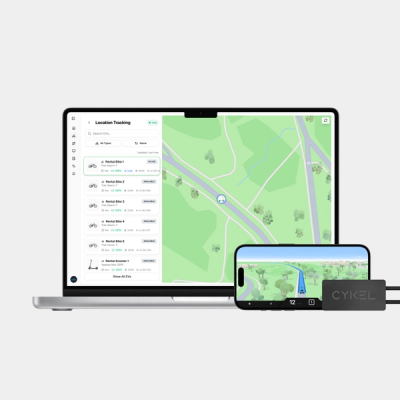
The Cykel Hub makes it easy to lock, mount, and manage eBikes securely, whereas the Cykel App gives riders full control over their experience, from unlocking bikes and customizing ride settings to tracking stats in real-time. Meanwhile, Cykel Connect provides fleet operators with a dashboard for:
- Usage insights
- Maintenance alerts
- Location tracking
Each element works independently but integrates seamlessly, creating a modular system that meets the needs of all kinds of use cases. That kind of integration—where hardware, software, and rider experience all work in sync—could be the shift that makes eBikes indispensable. It’s a long way from the first patent sketches of the 1890s.
But instead of focusing on a faster motor or a lighter frame, the next leap may lie in how everything comes together to create a more connected ride better suited to modern life, where technology is at the heart of everything we do.
Ready for a smarter ride? Discover what Cykel makes possible.

Written by
CYKEL Team
July 28, 2025
Last updated: May 27, 2026