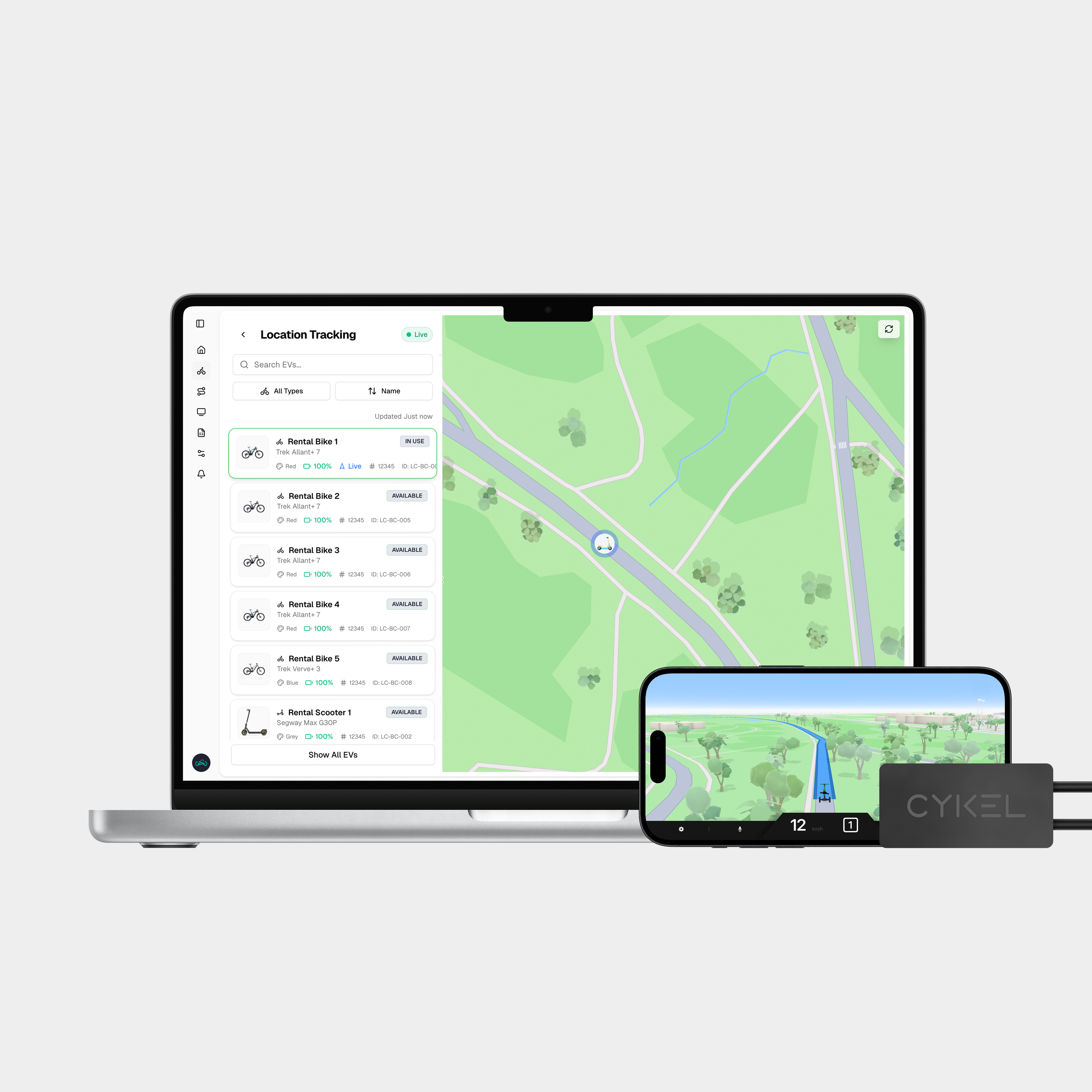
How To Monetize Your Connected Micromobility Fleet Beyond Rentals
April 30, 2026
Income from rental fees gets a lot of attention, but those numbers reflect only a small share of the value a connected micromobility fleet generates every day. Each scooter, e-bike, or moped carries sensors, GPS modules, and Internet of Things (IoT) connectivity that generate data, audience attention, and operational reach.
Together, this provides a number of monetization opportunities that fleet operators can take advantage of. In fact, operators who learn how to monetize their connected micromobility fleet beyond rentals can layer multiple revenue streams onto vehicles they already own and maintain.
Below, we’re going to discuss a number of opportunities fleet operators can use to diversify their revenue beyond rental fees.
The Value of Diversifying Fleet Revenue
Once you factor in vehicle depreciation, charging logistics, repairs, parking permits, and customer support, per-ride profit margins can be discouraging. Weather, seasonality, and local regulation create even more volatility that pure rental revenue struggles to absorb.
But this is where connected vehicles come in and change the equation.
Consider this: connected vehicles produce real-time location, ride history, rider demographics, and vehicle condition data… all of which carry commercial value. Hardware on the handlebars and decks can host advertising. The fleet itself can serve as a logistics layer for local commerce.
With that in mind, we’ll get into those specifics next.
13 Ways to Build Advertising Revenue Into Your Fleet
The 13 strategies below outline how to monetize your connected micromobility fleet beyond rentals using assets you already operate.
In-app and screen-based advertising
Advertising is the most direct way to add a second revenue stream. Connected micromobility puts brand impressions in front of riders and pedestrians at street level, in the moments when people are actually moving through a commercial district.
Riders interact with your app before, during, and after every trip. That attention, which is increasingly valuable, can be sold. Sponsored map pins, ride-end promotions, branded ride themes, and geofenced banner placements all command meaningful CPMs (cost per thousand impressions).
Vehicle-mounted advertising
On-vehicle displays, where local rules permit, extend the inventory beyond the phone.
Specifically for e-bikes, mudguards, printed panels on baskets, and even wraps and decals turn each unit into a moving billboard.
Connected fleets have an advantage here thanks to GPS data—it lets you report verified impressions and route coverage to advertisers. Often, this justifies premium rates compared to static outdoor media.
Geofenced sponsorships
Local advertisers will pay to be the default suggested destination, the offer that appears when a rider parks near a venue, or the brand attached to a specific zone. Geofenced sponsorships work particularly well around stadiums, festivals, shopping districts, and transit hubs.
License anonymized mobility data
Mobility data is one of the highest-value assets a connected fleet produces. Aggregated and anonymized, it answers questions that cities, retailers, insurers, and developers pay for.
Urban planning and transit partnerships
Cities use ride origin and destination data in many ways, including when they’re planning bike lanes, redesigning intersections, and measuring transit gaps.
Now, it’s common for transit authorities to run formal data-sharing programs that pay operators for clean, well-structured feeds. This is yet another opportunity to incorporate advertising revenue into your fleet.
Retail and real estate intelligence
Foot-traffic patterns derived from micromobility trips help a number of businesses in different ways.
For example, retailers use it to choose store locations, real estate firms use it to price commercial leases, and tourism boards turn to this data during plan marketing.
When you sell these insights (through a data partner or marketplace), you can create recurring revenue to scale with ride volume rather than vehicle count.
Insurance and risk modeling
Telematics data from connected vehicles informs underwriting for personal mobility insurance, fleet insurance, and pay-per-ride coverage. Insurance partners will pay for vehicle behavior data, crash patterns, and route risk profiles.
A note on compliance: any data program must comply with the General Data Protection Regulation (GDPR) and applicable local privacy rules. Build in anonymization, aggregation, and rider consent from day one.
Offer subscriptions and membership tiers
Subscriptions stabilize revenue and improve customer lifetime value.
Consider monthly and annual passes that cover unlimited rides under a time cap or a fixed number of rides per week. Often, these work well in markets with strong commuter demand. Predictable monthly revenue smooths out weather-driven dips in single-ride volume.
Tourism and event packages
Hotels, conference organizers, and tour operators will buy bulk ride credits to bundle with their own offerings. These wholesale packages move inventory during off-peak times and convert occasional visitors into riders without incurring retail acquisition costs.
Partner with local businesses and delivery services
A connected fleet is also a distribution network.
Cafes, gyms, and restaurants will pay for ride credit promotions that drive customers to their door. In this win-win scenario, you earn sponsorship fees, and partner businesses gain measurable foot traffic with verified trips.
E-bikes and cargo trikes can serve courier companies, grocery delivery platforms, and quick-commerce operators during off-peak rental hours. Some operators carve out a portion of the fleet as dedicated delivery vehicles.
Others license unused capacity through a partnership model. Either approach generates revenue from vehicles that would otherwise sit idle between commuter peaks.
Corporate sponsorship and branded fleet programs
Banks, telecoms, energy companies, and consumer brands sponsor named fleets in big cities to associate themselves with sustainable transport. A multi-year title sponsorship can fund a considerable share of fleet capital expenditure in return for things like naming rights, livery, and prominent placement in the rider app.
Smaller-scale corporate programs include:
- Employee ride credits
- Branded campus fleets at universities
- Event-specific deployments for conferences and festivals
License your platform and APIs
Once you’ve invested in a potent fleet management stack, that software is a product in its own right.
Smaller operators in adjacent markets often prefer to license proven technology rather than build it. White-label deployment of your dispatch, billing, and IoT firmware generates Software-as-a-Service (SaaS) revenue with high gross margins.
Travel apps, multimodal trip planners, hotel concierge platforms, and corporate mobility programs all want to embed micromobility into their offerings. Tiered API access, with revenue share or per-call pricing, opens the fleet to channels you would never reach directly.
Capture sustainability and carbon revenue
Every car trip a fleet replaces has measurable environmental value, and that value is increasingly bankable.
Voluntary carbon markets now accept verified mobility-displacement projects in some jurisdictions. As of 2026, the voluntary carbon market is valued at $2.29 billion.
Government grants and clean transport incentives also fund fleet expansion, vehicle replacement, and charging infrastructure.
Often, employers seeking to meet Environmental, Social, and Governance (ESG) targets will purchase corporate ride credits or fleet sponsorships as part of their sustainability reporting.
How To Monetize Your Connected Micromobility Fleet Beyond Rentals
A great place to start is with the streams that use data you already collect.
For example, you don’t need much new infrastructure for advertising and basic data licensing. Later, when your rider base is big enough to support recurring billing, you can layer in subscriptions. Eventually, you can pursue platform licensing and carbon revenue as the fleet matures and your software stack stabilizes.
Each stream compounds on the others. Together, they reduce dependence on rental fares and make the fleet resilient against weather, seasonality, and local rule changes.
If you’d like to learn more about transforming your EV fleets into revenue-generating experiences, book a demo with Cykel today.
FAQs
How much extra revenue can advertising add per vehicle?
Operators rarely publicly publish advertising revenue, so reliable industry benchmarks are hard to find.
Smaller fleets often start with single-sponsor partnerships at flat monthly rates. Operators that combine in-app inventory, on-vehicle wraps, and geofenced placements typically earn more per active vehicle.
All that said, the most useful benchmark is likely your own pilot data, when measured against the cost of selling and trafficking the inventory.
Is selling mobility data legal?
In some cases, it can be.
For example, it’s legal in California when data is anonymized, aggregated, and handled in accordance with the GDPR, the California Consumer Privacy Act (CCPA), and any local data protection rules.
Just keep in mind, personally identifiable information should never be shared. Many cities now prefer formal data-sharing agreements over commercial sale.
Can small fleets monetize beyond rentals?
Small fleets can also benefit from participating in advertising partnerships, local business sponsorships, and tourism packages. These options can effectively expand their reach while also maximizing monetization potential.
Larger operations tend to have more opportunities in data and platform licensing, since these strategies scale better with larger businesses.

Written by
CYKEL Team
April 30, 2026
Last updated: May 27, 2026